
Key Points
- Practical, step-by-step guidance on using an effective aba bathroom training protocol to build confidence, consistency, and lasting independence at home and in the community.
- Clear strategies for teaching bathroom skills in autism, including toileting, handwashing, dressing, and hygiene routines tailored to your child’s learning style.
- Evidence-based tools to support toilet independence in autistic children, reduce accidents, and create predictable, stress-free bathroom routines.
Bathroom independence in autism ABA programs focuses on building dignity, privacy, and daily living confidence. Many families seek guidance on teaching bathroom skills in autism when routines feel inconsistent or stressful. Toilet independence in an autistic child requires structured practice, visual support, and consistent reinforcement.
An effective ABA bathroom training protocol breaks skills into manageable steps, from initiating requests to mastering hygiene routines. Teaching bathroom skills to special needs children involves predictable scheduling, prompting hierarchies, and gradual fading of assistance.
A structured bathroom training in ABA program supports autism hygiene skills and increases independent bathroom skills in autism over time. When implemented consistently, bathroom training strategies in autism reduce anxiety and promote meaningful self-care progress.
Why Bathroom Independence Matters in Autism
Bathroom independence is about far more than staying dry. It supports dignity, health, safety, and inclusion. Children who develop independent bathroom skills often experience:
- Greater participation in school and community activities
- Increased self-esteem and privacy
- Reduced caregiver stress
- Improved physical health and hygiene
Research consistently shows that many children with autism experience delays in toileting compared to peers. Contributing factors may include communication differences, difficulty recognizing internal body signals, rigid routines, or sensory discomfort related to toilets, flushing sounds, or hand dryers.
Building independent bathroom skills in autism also strengthens broader self-care development. Toileting involves sequencing, motor coordination, communication, and waiting. These are foundational life skills that generalize into other areas such as dressing, eating, and personal organization.
Understanding the Building Blocks of Bathroom Skills
Before starting a formal aba toileting program, it helps to understand the smaller skills involved. Toileting is not one behavior. It is a chain of steps that may include:
- Recognizing the need to go
- Transitioning to the bathroom
- Pulling clothing down
- Sitting on the toilet
- Eliminating
- Wiping
- Flushing
- Washing hands
- Drying hands
- Pulling clothing up
If any link in this chain is difficult, the whole routine can break down. That is why teaching bathroom skills in autism focuses on task analysis, breaking the routine into clear, teachable steps.
An individualized plan also considers:
- Communication level
- Motor skills
- Sensory preferences
- Medical factors
- Motivation
Addressing constipation, urinary tract infections, or other medical concerns is essential before beginning structured training.
What Makes an ABA Bathroom Training Protocol Effective
An effective aba bathroom training protocol is systematic, data-driven, and tailored to the child. It typically includes:
Clear schedule
Children are taken to the bathroom at predictable intervals based on data about natural elimination patterns.
Positive reinforcement
Success is followed by meaningful rewards, such as praise, preferred activities, or small tangible items.
Prompting and fading
Adults provide as much help as needed initially, then gradually reduce support as independence grows.
Data collection
Caregivers track dry intervals, accidents, and successful voids to guide decisions.
Consistency across settings
Home and school collaborate when possible to maintain the same expectations and routines.
Evidence supports intensive, short-term training models for some children, where frequent scheduled sits are used during the initial phase. Other children benefit from a slower, gradual approach. The right pace depends on readiness and family capacity.
Assessing Readiness for Toilet Training
Readiness is not about age alone. While many children begin between ages two and four, children with autism may start later. Signs of readiness include:
- Staying dry for at least one to two hours
- Predictable bowel movement patterns
- Ability to sit on the toilet for a short period
- Tolerance of bathroom environment
- Basic understanding of simple instructions
Communication readiness does not require spoken language. Children can use gestures, picture cards, or communication devices to request the bathroom.
If your child shows resistance or high anxiety, start by building comfort. This may mean simply sitting clothed on the toilet, exploring the bathroom, or practicing handwashing before focusing on elimination.
Creating a Structured Bathroom Routine in Autism

A predictable bathroom routine in autism reduces anxiety and builds confidence. Visual supports are especially powerful. Consider:
- A visual schedule showing each step
- A timer to signal bathroom trips
- A consistent phrase such as “Bathroom time”
- A specific reinforcement system
Keep language simple and consistent. Instead of long explanations, use short, clear cues.
Environmental adjustments can also help:
- Use a footstool for stability
- Reduce bright lights if they are overwhelming
- Allow noise-canceling headphones if flushing sounds are distressing
- Choose comfortable clothing that is easy to pull down
When implementing structured bathroom training in aba, aim for predictability. Consistency builds trust and reduces power struggles.
Teaching the Skill Step by Step
ABA relies on task analysis and chaining. You can teach the routine in different ways:
Forward chaining
Teach the first step independently, then add the next step gradually.
Backward chaining
Complete most steps for your child, allowing them to finish the final step independently. This ensures each practice ends in success.
Total task presentation
Guide through all steps each time, fading prompts gradually.
For example, in teaching bathroom skills to special needs learners, you might begin by reinforcing simply sitting on the toilet for 10 seconds. Over time, increase duration and expectation.
Prompt types may include:
- Verbal prompts
- Gestural prompts
- Physical guidance
- Visual cues
The key is systematic fading. If prompts remain too long, independence will stall.
Reinforcement That Truly Motivates
Reinforcement is central to bathroom training strategies in autism. The reward must be meaningful to the child, not just convenient for adults.
Effective reinforcers may include:
- Favorite snacks reserved only for bathroom success
- Access to a special toy
- Short videos
- High-energy praise
- Stickers leading to a larger reward
Deliver reinforcement immediately after success. Specific praise works best, such as “You peed in the toilet, great job.”
Over time, gradually fade tangible rewards and rely more on social praise and natural reinforcement. The goal is independence, not permanent reward dependence.
Addressing Accidents Without Shame
Accidents are part of learning. Respond calmly and neutrally. Avoid punishment or lengthy lectures. Instead:
- Gently guide your child to help clean up
- Use simple statements like “Pee goes in the toilet”
- Return to the schedule
Shame can increase anxiety and delay progress. A supportive tone maintains emotional safety.
If accidents increase significantly, reassess the schedule. The intervals may be too long, or the child may need stronger reinforcement.
Building Autism Hygiene Skills Beyond Toileting
True autism hygiene skills include more than using the toilet. They involve:
- Proper wiping
- Flushing consistently
- Handwashing with soap
- Drying hands completely
- Managing clothing independently
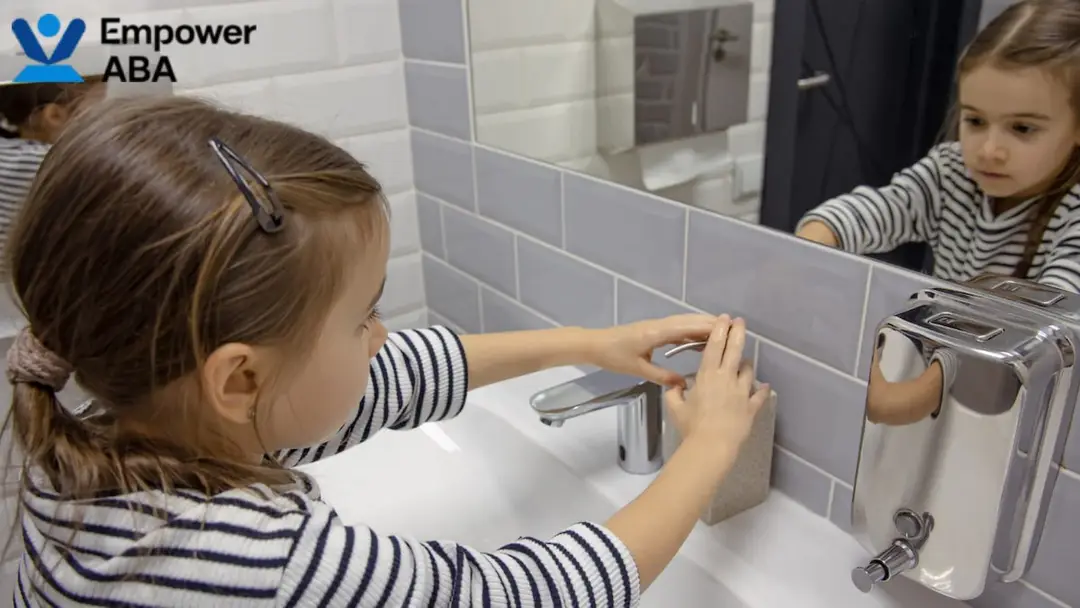
Handwashing can be taught with a clear visual sequence:
- Turn on water
- Wet hands
- Pump soap
- Scrub for 20 seconds
- Rinse
- Turn off water
- Dry hands
Use songs or timers to support duration. For children sensitive to water temperature or texture, gradual desensitization can reduce resistance.
Teaching these skills strengthens overall autism self-care skills in bathroom routines and prepares children for greater independence at school and in public settings.
Supporting Toilet Independence in Autistic Child at School
Collaboration with school staff is essential. Share your home plan and data when possible. Consistency supports faster progress.
Helpful strategies include:
- Identical visual schedules at home and school
- Consistent reinforcement systems
- Clear communication between caregivers and teachers
- Regular data review
If your child has an individualized education plan, toileting goals can be included. Independence in toileting supports academic participation and social inclusion.
Managing Sensory and Anxiety Barriers
Sensory differences are common in autism and can significantly affect bathroom independence in autism aba programs.
Common sensory challenges include:
- Fear of flushing sound
- Sensitivity to cold toilet seats
- Aversion to hand dryers
- Discomfort with certain clothing textures
Gradual exposure can help. For example, start by flushing when the child is outside the bathroom, then slowly decrease distance.
Anxiety may also stem from fear of change. Prepare your child before transitions with visual countdowns or timers. Celebrate small wins, such as entering the bathroom calmly.
Fading Supports and Promoting True Independence
The ultimate goal of any aba toileting program is independence across settings. As success increases:
- Extend time between scheduled sits
- Fade prompts
- Reduce tangible reinforcers
- Encourage self-initiation
Teach your child to request the bathroom using words, pictures, or devices. Prompt the request before transitioning, then gradually wait for spontaneous communication.
Track progress objectively. Data helps you know when to move forward or adjust.
When Progress Feels Slow
Toilet training can take weeks or months. Progress is rarely linear. Plateaus are common.
If you feel stuck:
- Reevaluate medical factors
- Increase reinforcement strength
- Shorten intervals between bathroom trips
- Simplify the routine
- Seek guidance from a trained behavior analyst
Remember that independence develops at different paces. The goal is steady improvement, not perfection.
Frequently Asked Questions
How long does an ABA bathroom training protocol usually take?
Duration varies. Some children make progress in weeks with intensive schedules, while others require several months of gradual training based on readiness and consistency.
What if my child is afraid of sitting on the toilet?
Start slowly. Reinforce simply entering the bathroom, then sitting clothed on the toilet. Gradually increase expectations while pairing the experience with positive reinforcement.
Can nonverbal children achieve toilet independence?
Yes. Communication can occur through gestures, picture cards, or devices. Functional communication is taught alongside elimination skills for lasting independence.
Should nighttime training happen at the same time?
Not always. Night dryness often develops later and may depend on biological readiness. Focus on daytime success first before addressing nighttime independence.
What if my child regresses after making progress?
Regression can happen due to illness, stress, or routine changes. Return to a structured schedule, increase reinforcement temporarily, and review any medical concerns.
Confidence Starts in the Smallest Steps. Build Bathroom Independence Today.
Independence in daily routines creates lasting confidence. Empower ABA implements a structured bathroom training in ABA approach that promotes toilet independence in autistic children through clear, measurable goals. Our ABA toileting program uses evidence-based prompting, reinforcement, and consistent scheduling to support autism self-care skills in the bathroom.
We guide families in teaching bathroom skills in autism with practical strategies that reduce stress and build predictability. From initiating requests to mastering hygiene routines, our ABA bathroom training protocol focuses on steady, respectful progress.
Empower ABA partners with families to transform bathroom routines into opportunities for growth.
Contact us today to begin building independent bathroom skills in autism with compassionate, structured support.