
Key points:
- Bilingual ABA therapy in NYC and NJ helps Spanish-speaking families access autism services without language barriers or cultural gaps.
- Hispanic families with autistic children deserve ABA care that respects their language, values, and daily home routines.
- Bilingual ABA therapists in Brooklyn, Queens, and NJ provide evidence-based autism therapy in Spanish for children and parents.
Getting an autism diagnosis for your child is hard. Getting ABA therapy in a city where the waiting lists are long is harder. And navigating all of it in a second language, with providers who don’t understand your family’s culture or communication style, can feel nearly impossible. Hispanic families in New York and New Jersey face exactly this combination of challenges every day.
ABA therapy in New York is available in bilingual formats, and this guide explains what that looks like, why it matters, and how your family can access it.
Why Language Matters More Than You Think in ABA Therapy
ABA therapy is built on communication. Therapists give instructions, explain what’s happening, collect information from parents, and teach language-based skills. When that communication happens in a language the parent doesn’t fully understand, something critical gets lost.
It’s not just about translation. Parent training is a central component of effective ABA therapy. Parents are taught to implement strategies, track behaviors, and respond consistently at home. A research study published in Pediatrics found that Hispanic children with autism are significantly less likely to receive ABA therapy than non-Hispanic white children, partly due to language barriers, cultural mistrust of service systems, and lack of bilingual providers. That gap has real consequences for child outcomes.
When a BCBA conducts a parent training session in English with a Spanish-dominant parent relying on a child to translate, the fidelity of the intervention collapses. The parent can’t accurately implement what they didn’t fully understand. The child’s progress slows. Everyone is frustrated.
The solution isn’t just having a bilingual staff member on call for emergencies. It’s building the entire therapeutic relationship in the language the family is most comfortable in. Understanding parent training in ABA therapy shows why this involvement is non-negotiable for good outcomes.
What Bilingual ABA Therapy Actually Includes
Bilingual ABA therapy isn’t a special category with different techniques. The ABA methods are the same: discrete trial teaching, natural environment teaching, functional communication training, and reinforcement systems. What changes is the language of delivery and the cultural responsiveness of the approach.
In a quality bilingual ABA program in New York or New Jersey, you should expect:
- Assessment tools and intake paperwork available in Spanish
- A Spanish-speaking BCBA or a bilingual RBT supervised by a BCBA who is fluent in both languages
- Parent training sessions are conducted entirely in the family’s preferred language
- Communication goals that account for the child’s bilingual environment, including code-switching and dual-language development
- Cultural sensitivity in how reinforcers are selected and how family dynamics are respected in session design
One thing many Hispanic families don’t realize is that raising a bilingual autistic child doesn’t require choosing one language over the other. Current research strongly supports bilingual development in children with autism. A child can learn Spanish at home and English at school without the two conflicting. Functional communication training in ABA applies across both languages simultaneously when therapy is delivered correctly.
Accessing Bilingual ABA Services in Brooklyn and Queens
Brooklyn and Queens have among the highest concentrations of Spanish-speaking families in the United States. They also have significant populations from Mexico, Puerto Rico, the Dominican Republic, Ecuador, and elsewhere in Latin America, each bringing different cultural contexts and expectations around disability, help-seeking, and professional relationships.
Finding a bilingual ABA provider in Brooklyn or Queens starts with knowing what to ask. You don’t need to accept a situation where a therapist who doesn’t speak Spanish works with your family, and a staff member occasionally translates. Ask specifically: Is the BCBA who will write my child’s program fluent in Spanish? Will the RBT working directly with my child communicate with them in Spanish? Is parent training for autism available in my preferred language?
Insurance in New York covers ABA therapy for autism without a bilingual surcharge. The cost to you, through Medicaid or private insurance, is the same regardless of language. What you’re entitled to is linguistically accessible care, not just care that technically exists.
For families who have recently received a diagnosis and aren’t sure where to begin, the page on what to do after an autism diagnosis offers a practical starting point in plain language.
Bilingual ABA Therapy in New Jersey: Newark, Jersey City, and Beyond
New Jersey’s Hispanic population is concentrated in cities like Newark, Jersey City, Elizabeth, Paterson, and Perth Amboy. These communities have high rates of unmet autism service needs, particularly among families where English is a second language. New Jersey’s autism insurance mandate is strong, meaning insurers are required to cover ABA therapy. But coverage doesn’t automatically translate to access, especially when families don’t know what they’re entitled to or can’t communicate their needs effectively in an intake process conducted in English. Learning how ABA therapy insurance coverage works in NJ gives families a starting advantage.
In Newark specifically, there are community health navigation resources and parent advocacy organizations that can help Spanish-speaking families understand their rights under IDEA and New Jersey’s autism insurance law. Connecting with these organizations alongside a bilingual ABA provider gives families the strongest possible foundation.
The intake process for bilingual ABA therapy in NJ follows the same general steps as any ABA service: referral or self-referral, insurance verification, assessment by a BCBA, treatment plan development, and session delivery. The difference is that each of these steps happens in Spanish when a family requests it.
Cultural Factors That Affect How Hispanic Families Experience ABA
Talking about culture in the context of therapy can feel abstract. Here are some concrete ways it shows up in practice and why they matter.
Many Hispanic families have strong extended family networks and grandparents, aunts, and uncles who are involved in a child’s care. A culturally responsive ABA provider will ask about these relationships and find ways to involve them constructively, rather than treating only the immediate household as the relevant unit.
There’s also a pattern of delayed help-seeking among some Hispanic families, not because they don’t care, but because disability is sometimes understood through a different cultural and religious lens. A provider who dismisses these perspectives or steamrolls past them will lose the family’s trust. One who engages respectfully, explains the evidence, and meets the family where they are will have a much more productive relationship. Understanding autism social skills challenges and how they affect family and peer dynamics is part of building that trust.
Respeto, or respect, is a deeply held value in many Latin American cultures. How a clinician speaks to parents, particularly fathers, how they address grandparents, and whether they take time to build a genuine relationship before jumping into intervention all matter. These aren’t soft concerns. They’re practical determinants of whether a family stays engaged with therapy long enough to see results.
Supporting Bilingual Language Development in Autistic Children
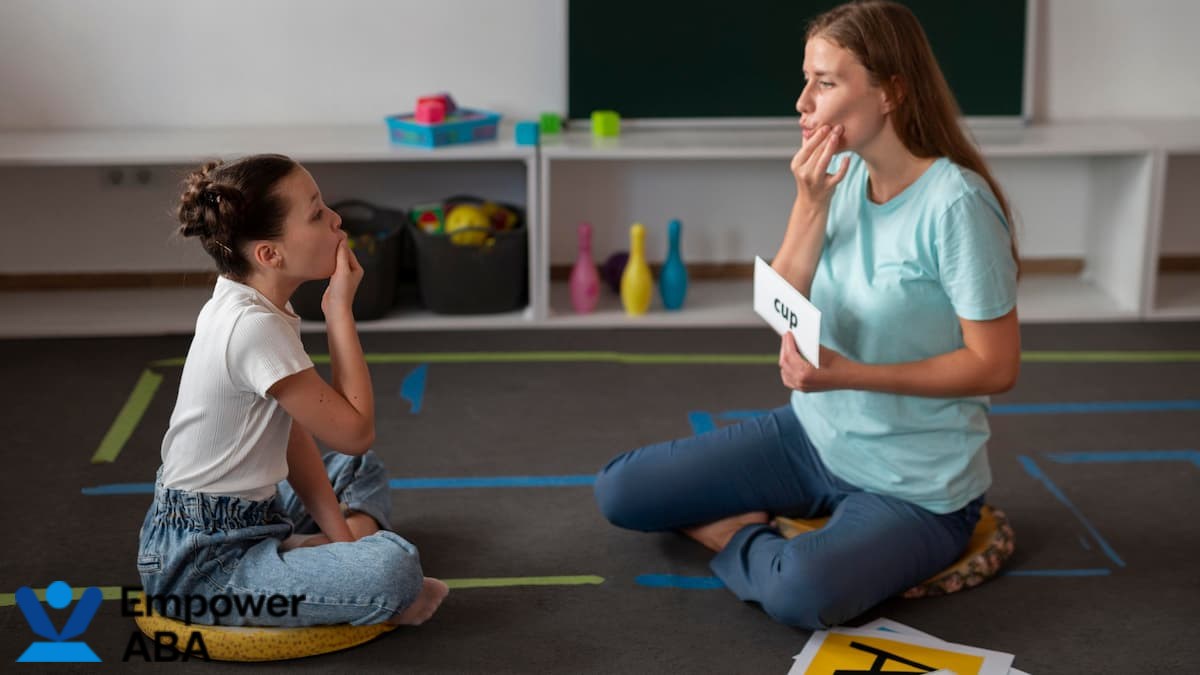
This deserves its own section because it comes up constantly for Hispanic families. Will speaking Spanish at home confuse my child? Should we switch to English to help with therapy? The answer, supported consistently by research, is no. Bilingualism does not cause or worsen autism.
A study published in the American Journal of Speech-Language Pathology found that bilingual children with autism developed language at rates comparable to monolingual peers and showed no disadvantage from dual-language exposure.
Speaking Spanish at home is part of your child’s identity, their connection to family, and their ability to function within your community. Giving that up for the sake of therapy compliance isn’t necessary and isn’t advisable.
A bilingual BCBA will develop communication targets in both languages when appropriate, coordinate with speech therapy to support dual-language goals, and help you understand how to reinforce language at home in Spanish consistently. Giving every child a voice through AAC devices is a related area where bilingual considerations also apply, particularly in selecting device vocabulary that reflects the child’s actual linguistic environment.
Frequently Asked Questions
How do I find a bilingual ABA therapist in New York or New Jersey?
Ask ABA providers directly whether they have Spanish-speaking BCBAs and RBTs on staff. Request that all assessments, parent training, and session communication be conducted in Spanish. Don’t accept a situation where translation is offered only on request.
Will my child’s insurance cover bilingual ABA therapy in NYC or NJ?
Yes. Insurance coverage for ABA therapy in New York and New Jersey doesn’t depend on the language of delivery. Bilingual services are not a premium add-on. They’re a reasonable accommodation and a standard of linguistically accessible care.
Is it okay for my child to speak Spanish at home while receiving ABA therapy in English at the clinic?
Absolutely. Research supports bilingual language development in children with autism. Maintaining Spanish at home is valuable for family connection, cultural identity, and community participation. Coordinate with your BCBA to set consistent communication goals across both languages.
What if the only available ABA providers in my area don’t speak Spanish?
Telehealth ABA services can expand your access to bilingual providers beyond your immediate geography. Virtual ABA therapy and parent training in Spanish are available and can be effective, particularly for parent coaching components.
How does cultural background affect the autism diagnosis and treatment process?
Cultural factors can affect how autism symptoms are perceived, how and when families seek diagnosis, and how they engage with treatment. A culturally responsive provider will acknowledge these factors, build trust patiently, and adapt their communication style to match family values without compromising the evidence base.
Terapia En Español. Results in Every Language.
Language isn’t a barrier when you have the right team. Empower ABA provides bilingual ABA therapy in New York and New Jersey for Hispanic families who want autism support that speaks their language, literally and culturally. From Brooklyn and Queens to Newark and Jersey City, our Spanish-speaking BCBAs and bilingual therapists build real relationships and deliver real results. Your child’s culture is not an obstacle to therapy.
It’s part of who they are. Let us build a program that honors that. Reach out today in English or Spanish, and let’s take the first step together.